What a 10-Minute Grid Scare in Virginia Says About Your Energy Costs
On July 22, a single transmission line fault outside Washington, D.C. briefly rattled the largest power grid in the country. It may read like a regional utility story, but the implications reach well beyond Virginia: the grid is being pushed harder than it was built for, and the pressure is starting to show up on commercial electricity bills.
What Happened
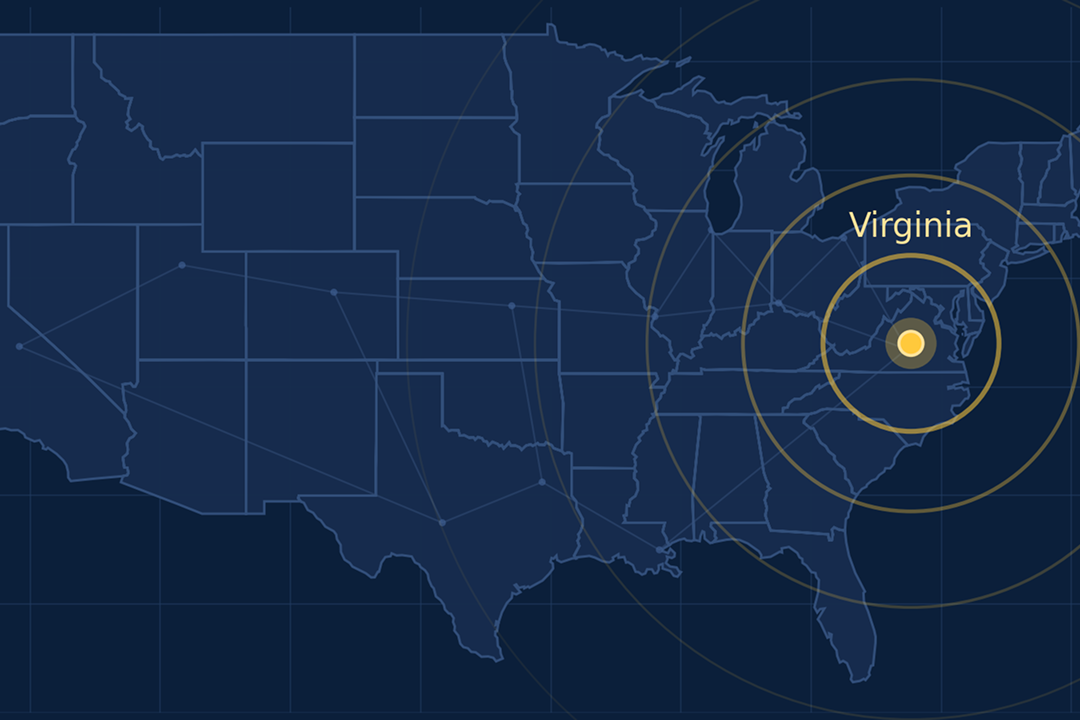
A fault on a high-voltage line in Ashburn, Virginia set off a chain reaction across the region's data center corridor, the largest concentration of data centers in the world. To protect their equipment, data centers automatically switched to backup power, pulling roughly 3 gigawatts of load off the grid in seconds, about 3% of total demand at the time. Grid operators needed about ten minutes to rebalance, versus the milliseconds a routine disturbance takes. Some nearby homes saw lights dim, though no outages followed.
No one lost power in the traditional sense. But an event felt as far away as Chicago, triggered by one piece of equipment, shows how tightly stretched the system has become.
Why the Grid Is Under Pressure
Electricity demand is climbing faster than the grid can expand to meet it, driven largely by data center growth. The strain is already measurable:
- PJM, the grid operator serving Virginia and twelve other states, set a new all-time demand record this July, passing a mark that had stood since 2006
- The U.S. Department of Energy projects Northern Virginia could see 400+ hours of outages a year by 2030, up from roughly two today, if the trend continues
- Grid operators in Texas and California are setting similar records
What This Means for Your Business
For commercial operators, these trends create two pressures, and one is often overlooked.
Less predictable reliability. July 22 showed that localized failures can ripple across state lines. As the margin between supply and demand narrows, the risk of disruptions and voltage instability rises.
Higher utility bills. Meeting record demand requires massive new investment in generation and transmission. In most regulated markets, utilities are guaranteed a return on that capital, and those costs pass through to customers. Analysts have already tied billions in higher grid-capacity charges directly to data center demand, expenses that ultimately land on commercial electricity bills. This is a long-term structural trend, not short-term volatility.
The Role of On-Site Energy
As the market tightens, many businesses are turning to on-site systems to regain control. Solar paired with battery storage can reduce exposure to rising rates, improve resilience during outages and disturbances like July 22, and lock in more predictable long-term costs.
The market is already moving this way: solar and storage made up 91% of all new U.S. generating capacity in the first half of 2026, and battery storage is on pace for a record 24+ gigawatts this year. Operators who have already paired the two are insulated from exactly this kind of volatility.
Where to Start
For most organizations, the first step is understanding what's possible for their specific facility. A feasibility analysis can evaluate available space, local utility rates and demand charges, incentives and financing options, and potential system size and return.
Interested in exploring renewable energy for your facility? Start with our free feasibility analysis to understand the potential system size, financial value, and available incentives for your property.
Sources & Further Reading (.edu / .org)
- Columbia University SIPA Center on Global Energy Policy (hosting MIT CEEPR research): "Glass Half Full: Building a Decarbonized U.S. Power Sector" — https://www.energypolicy.columbia.edu/publications/glass-half-full-building-a-decarbonized-u-s-power-sector/
- Solar Energy Industries Association (SEIA): "6 Records Solar and Storage Have Crushed in the First Half of 2026" — https://seia.org/blog/6-records-solar-and-storage-have-crushed-in-the-first-half-of-2026/
- Solar Energy Industries Association (SEIA): "Solar and Storage Reliability" — https://seia.org/initiatives/solar-and-storage-reliability/
Stay Informed with HSI
Get the latest news and updates from HSI Solar Company.

What the Stalled 2026 Farm Bill Means for REAP-Eligible Businesses
What a 10-Minute Grid Scare in Virginia Says About Your Energy Costs

What a $10.7 Billion Energy Deal Means for the Future of Commercial Power